Chúng tôi dùng cookie, bao gồm cookie phân tích, để cải thiện Tradeways. · Quyền riêng tư
P&L đã thực hiện là lãi hoặc lỗ từ phần số lượng bạn đã đóng. P&L chưa thực hiện là lãi hoặc lỗ của phần số lượng còn mở, được định giá theo mức giá đánh dấu hiện tại. Một vị thế đóng một phần có thể đồng thời có cả hai giá trị.
Dùng P&L đã thực hiện cho phần giao dịch đã hoàn tất. Dùng P&L chưa thực hiện để hiểu giá trị đánh dấu của phần còn mở. Không cộng hai giá trị trước khi xác nhận chúng dùng cùng tiền tệ, cách xử lý phí, số lượng vị thế và thời điểm đánh dấu.
"Đã thực hiện" không phải lúc nào cũng có nghĩa là ròng. P&L gộp đã thực hiện đến từ các lần khớp lệnh vào và thoát được ghép với nhau. P&L ròng đã thực hiện còn tính các khoản hoa hồng và điều chỉnh được hỗ trợ. Hãy kiểm tra giá trị mà sao kê nhà môi giới, nhật ký hoặc biểu đồ hiển thị trước khi so sánh hai tổng số.
P&L chưa thực hiện phụ thuộc vào giá đánh dấu. Giá trị thay đổi khi giá đánh dấu thay đổi. Giá đánh dấu bị thiếu, chậm hoặc đến từ nguồn khác có thể khiến hai hệ thống hiển thị P&L mở khác nhau dù các lần khớp lệnh trùng khớp.
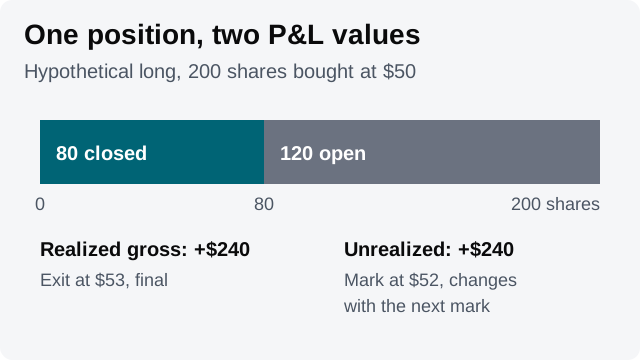
Giả sử bạn mua 200 cổ phiếu ở mức 50 USD, bán 80 cổ phiếu ở mức 53 USD và 120 cổ phiếu còn lại được đánh dấu ở mức 52 USD. Ví dụ dùng cổ phiếu có hệ số hợp đồng bằng một và không tính phí.
Ghép số lượng đã đóng. Lệnh bán đóng 80 trong số 200 cổ phiếu.
Tính P&L gộp đã thực hiện cho 80 cổ phiếu: (53 - 50) × 80 = $240.
Tính P&L chưa thực hiện cho 120 cổ phiếu còn lại: (52 - 50) × 120 = $240.
Giữ hai giá trị riêng. Giao dịch có P&L gộp đã thực hiện 240 USD và P&L chưa thực hiện 240 USD tại mức giá đánh dấu đã nêu.
Giao dịch giả định. Số lượng đã đóng và số lượng còn mở được định giá riêng: phần đã thực hiện theo giá thoát, phần còn mở theo giá đánh dấu.
Nếu sau đó bạn bán 120 cổ phiếu còn lại ở mức 51,50 USD, lần đóng thứ hai ghi nhận (51.50 - 50) × 120 = $180. P&L gộp đã thực hiện cuối cùng là 420 USD và không còn P&L chưa thực hiện vì vị thế đã về 0.
Với vị thế bán, hướng giá có lợi được đảo ngược. Với công cụ như hợp đồng tương lai, Forex, tiền mã hóa và CFD, biến động giá phải được quy đổi bằng cấu hình bước giá, điểm, lot hoặc giá trị hợp đồng của công cụ. Không nên dùng công thức cổ phiếu cho mọi loại công cụ.
Tradeways gọi giá trị đánh dấu của số lượng còn mở là P&L hiện tại. Giá trị này cần giá đánh dấu từ nhà môi giới. Hiện tại, giá đánh dấu của nhà môi giới chỉ đến từ mục Open Positions trong Activity Flex Query của Interactive Brokers và chỉ áp dụng cho vị thế cổ phiếu và ETF. Giao dịch mở không có giá đánh dấu chỉ hiển thị P&L đã thực hiện. Điều này bao gồm giao dịch từ các nguồn nhập khác, giao dịch Interactive Brokers được nhập không kèm mục Open Positions và các vị thế không phải cổ phiếu hoặc ETF.
Lấy giao dịch ở trên, trước lần bán thứ hai, với hoa hồng 1 USD được ghi nhận trên mỗi lần trong hai lần khớp lệnh. Bạn nhập các lần khớp lệnh cùng báo cáo Open Positions ngày 30 tháng 9, trong đó cổ phiếu được đánh dấu ở mức 52 USD.
Giá trị trong giao dịch
Phép tính
Số tiền
P&L gộp đã thực hiện
(53 - 50) × 80
$240
P&L hiện tại tại mức đánh dấu ngày 30 tháng 9
(52 - 50) × 120
$240
P&L gộp
240 + 240
$480
Hoa hồng
1 USD trên mỗi lần trong hai lần khớp lệnh
−$2
P&L ròng trong tiêu đề giao dịch
480 - 2
$478
Ở chế độ hiển thị theo tiền tệ, tiêu đề giao dịch hiển thị 478 USD là P&L ròng, kèm dòng "P&L hiện tại tính đến" và ngày của báo cáo bên dưới. Con số này đã bao gồm phần P&L hiện tại. Ngày đó thuộc về giá đánh dấu, không phải thời điểm bạn mở trang. Tradeways dùng giá đánh dấu theo ngày báo cáo trong tệp, không dùng giá trực tiếp, nên P&L hiện tại giữ ở mức 240 USD cho đến khi bạn nhập báo cáo mới hơn. P&L chưa thực hiện trong tệp của nhà môi giới chỉ được giữ để so sánh; Tradeways tính lại P&L hiện tại từ các lô FIFO còn mở trong nhật ký của bạn.
Phần P&L hiện tại cũng không nằm trong các kết quả cần một kết quả cuối cùng. Lịch, tỷ lệ thắng và các thống kê khác chỉ tính các giao dịch đã đóng. Số dư tài khoản bao gồm P&L hiện tại gần nhất có sẵn của các vị thế mở có giá đánh dấu và nêu rõ điều này khi có.
Khi vị thế được đóng, giá đánh dấu bị gỡ bỏ. Nếu lần bán thứ hai ở mức 51,50 USD cũng có hoa hồng 1 USD, P&L ròng trở thành P&L gộp cuối cùng 420 USD trừ 3 USD hoa hồng, tức 417 USD, và nhãn P&L hiện tại biến mất.
Khi một vị thế có nhiều điểm vào ở các mức giá khác nhau, phương pháp ghép quyết định số lượng của điểm vào nào được đóng bởi một lệnh thoát. Tradeways dùng phương pháp nhập trước, xuất trước, hay FIFO, nên số lượng mở lâu nhất được ghép trước.
Xét hai lần vào lệnh, mỗi lần 100 cổ phiếu, lần đầu ở mức 50 USD và lần thứ hai ở mức 54 USD. Theo FIFO, lệnh bán 120 cổ phiếu ở mức 55 USD đóng toàn bộ 100 cổ phiếu từ lần vào 50 USD và 20 cổ phiếu từ lần vào 54 USD. Số lượng mở còn lại là 80 cổ phiếu từ lần vào thứ hai. P&L đã thực hiện đến từ hai phần được ghép. P&L chưa thực hiện dùng 80 cổ phiếu còn lại và mức giá đánh dấu hiện tại.
Nếu nền tảng khác dùng phương pháp ghép khác, phần chia giữa P&L đã thực hiện và chưa thực hiện có thể khác trước khi vị thế được đóng hoàn toàn. Hãy so sánh các lần khớp lệnh, phương pháp ghép và các lô còn lại trước khi kết luận một kết quả là sai.
P&L gộp đã thực hiện là kết quả từ biến động giá của các lần khớp tương ứng trước hoa hồng.
P&L ròng đã thực hiện gồm hoa hồng và điều chỉnh được hỗ trợ.
P&L chưa thực hiện định giá số lượng đang mở theo một mức giá đánh dấu.
Tổng P&L theo giá đánh dấu chỉ kết hợp P&L đã thực hiện với P&L chưa thực hiện khi tiền tệ và cách xử lý chi phí trùng khớp.
Phí có thể được ghi nhận bằng tiền tệ khác hoặc vào ngày khác. Nếu không có tỷ giá quy đổi cần thiết, nhật ký có thể loại số tiền đó và đánh dấu tổng là chưa đầy đủ. Tổng chưa đầy đủ không có nghĩa là 0.
Biên độ thuận lợi tối đa là P&L mở tốt nhất được quan sát khi giữ giao dịch. Biên độ bất lợi tối đa là P&L mở tệ nhất. Các chỉ số này mô tả đường đi của giao dịch, không phải kết quả đã thực hiện cuối cùng.
Do đó, một giao dịch có thể kết thúc với một kết quả đã thực hiện nhưng có các giá trị MFE và MAE khác. Nếu thiếu dữ liệu thị trường hoặc phép tính chưa hoàn tất, các chỉ số biên độ có thể vẫn ở trạng thái chờ. Hãy giữ rõ nguồn gốc trạng thái này thay vì coi chỉ số còn thiếu là 0.
Tradeways tính P&L đã thực hiện từ các lần khớp lệnh tương ứng và có thể thêm P&L đánh dấu của phần mở khi có giá đánh dấu. Trong Chi tiết giao dịch, hãy so sánh các lần khớp lệnh, giá trị gộp và ròng, điều chỉnh cùng trạng thái chỉ số biên độ trước khi dùng số liệu trong một lần rà soát.