Usamos cookies, incluindo os de análise, para melhorar o Tradeways. · Privacidade
Um diário de trading precisa de campos suficientes para identificar um Trade, conferir suas execuções e explicar as decisões envolvidas. Mantenha o registro de origem separado dos resultados calculados e das suas notas. Adicione um campo opcional apenas quando souber qual pergunta ele ajudará a responder na revisão.
Comece pela conta, instrumento, direção, execuções, taxas, horários e status do Trade. Depois, acrescente o Setup, o plano registrado, o estado da revisão e o contexto de apoio. Não existe um número fixo de campos adequado a todos os Brokers, instrumentos ou processos de trading.
Use esta tabela para definir a origem e a finalidade de cada campo. Um valor importado não está necessariamente completo, e um valor calculado não equivale a um extrato do Broker.
Campo
Origem
O que permite verificar
Conta e instrumento
Importação ou registro manual conferido
Qual registro você está revisando, incluindo o contrato quando relevante.
Direção, quantidade, preços e horários de execução
Registro de execuções
Como a posição foi aberta, alterada e fechada. Preserve cada execução.
Status aberto ou fechado
Registro do Trade
Se a posição foi encerrada ou ainda há quantidade em aberto.
Comissões e outros ajustes
Importação ou registro manual conciliado
Quais custos ou créditos entram no resultado e quais ainda estão ausentes.
Resultado, moeda e unidade de exibição
Cálculo com base no registro do Trade
O que o resultado representa e se pode ser comparado com outra visualização.
Setup ou estratégia
Sua classificação
A qual processo registrado o Trade pertence.
Condição de entrada e saída planejada
Seu plano ou níveis registrados no Broker
O que se sabia antes da execução e o que mudou depois.
Verificações de regras e estado da revisão
Verificações calculadas e sua revisão
Quais verificações passaram, falharam ou ainda exigem atenção.
Nota e gráfico de apoio
Sua observação
Contexto que o registro de execuções não explica.
Registre o fuso horário ao inserir ou interpretar horários. Se uma importação usar um fuso diferente do exibido no diário, confira o instante correspondente antes de alterar o horário registrado. Uma data, por si só, não basta para investigar o limite entre sessões.
Mantenha o registro original disponível ao corrigir uma execução ou taxa. Não altere um valor da origem apenas para fazer um resumo coincidir com o resultado esperado.
Uma condição de entrada planejada e uma execução real descrevem fatos diferentes. O mesmo vale para um stop planejado e uma alteração posterior do stop. Preserve ambos quando a diferença for relevante para a revisão.
Use uma nota curta no plano para registrar o Setup e a condição que o invalidaria. Registre uma explicação posterior como observação posterior. Se reconstruir o plano após o Trade, identifique-o como reconstruído em vez de apresentá-lo como um registro feito na época.
Use etiquetas consistentes nas classificações pelas quais você filtra com frequência. Um desvio específico, como "entrou antes da condição registrada", dá à revisão uma pergunta definida. Uma etiqueta como "Trade ruim" mistura uma opinião com o resultado.
Campos subjetivos são opcionais. Se você acompanhar confiança ou emoção, defina o significado de cada valor e registre quando o inseriu. Mantenha essas observações separadas dos fatos importados. Remova o campo se nunca o usar ou não conseguir preenchê-lo de forma consistente.
Não insira zero apenas para preencher uma célula vazia. Taxas iguais a zero, taxas desconhecidas e taxas ainda não importadas são situações diferentes.
A mesma distinção vale para métricas calculadas. MFE, MAE e MCE podem acrescentar contexto sobre o percurso do preço, mas dependem dos dados de mercado disponíveis e dos períodos usados no cálculo. Não devem fazer parte de uma lista obrigatória de preenchimento manual. Deixe visíveis a origem e a disponibilidade dessas métricas ao usá-las.
Na Tradeways, uma métrica de excursão pode ficar pendente enquanto os dados ou o cálculo estiverem incompletos. Um gráfico também pode estar indisponível mesmo que as execuções estejam presentes. Alguns gráficos usam um mercado de referência, identificado abaixo do gráfico, em vez do Feed de preços do Broker. Não trate todo preço exibido no gráfico como preço de execução.
Um registro hipotético incompleto poderia ser assim:
Item
Estado registrado
Ação na revisão
Execuções de entrada e saída
Conferidas com o extrato
Manter o registro de origem.
Comissão
Aguardando confirmação
Deixar a questão do custo em aberto.
Métricas de excursão
Pendentes
Não substituir por zero nem tirar conclusões sobre a saída.
Condição de entrada
Registrada antes da execução
Compará-la com a execução real.
Nota de revisão
Processo verificado; custos pendentes
Indicar a pendência para a próxima revisão.
Esse registro permite revisar a condição de entrada, mesmo com a questão do custo em aberto. Declare essa limitação antes de incluí-lo em uma comparação mais ampla.
Um Trade revisado indica que a revisão foi concluída. Isso não significa que o Trade foi lucrativo ou seguiu todas as regras. Um Trade com perda pode seguir o plano registrado, e um Trade lucrativo pode conter um desvio.
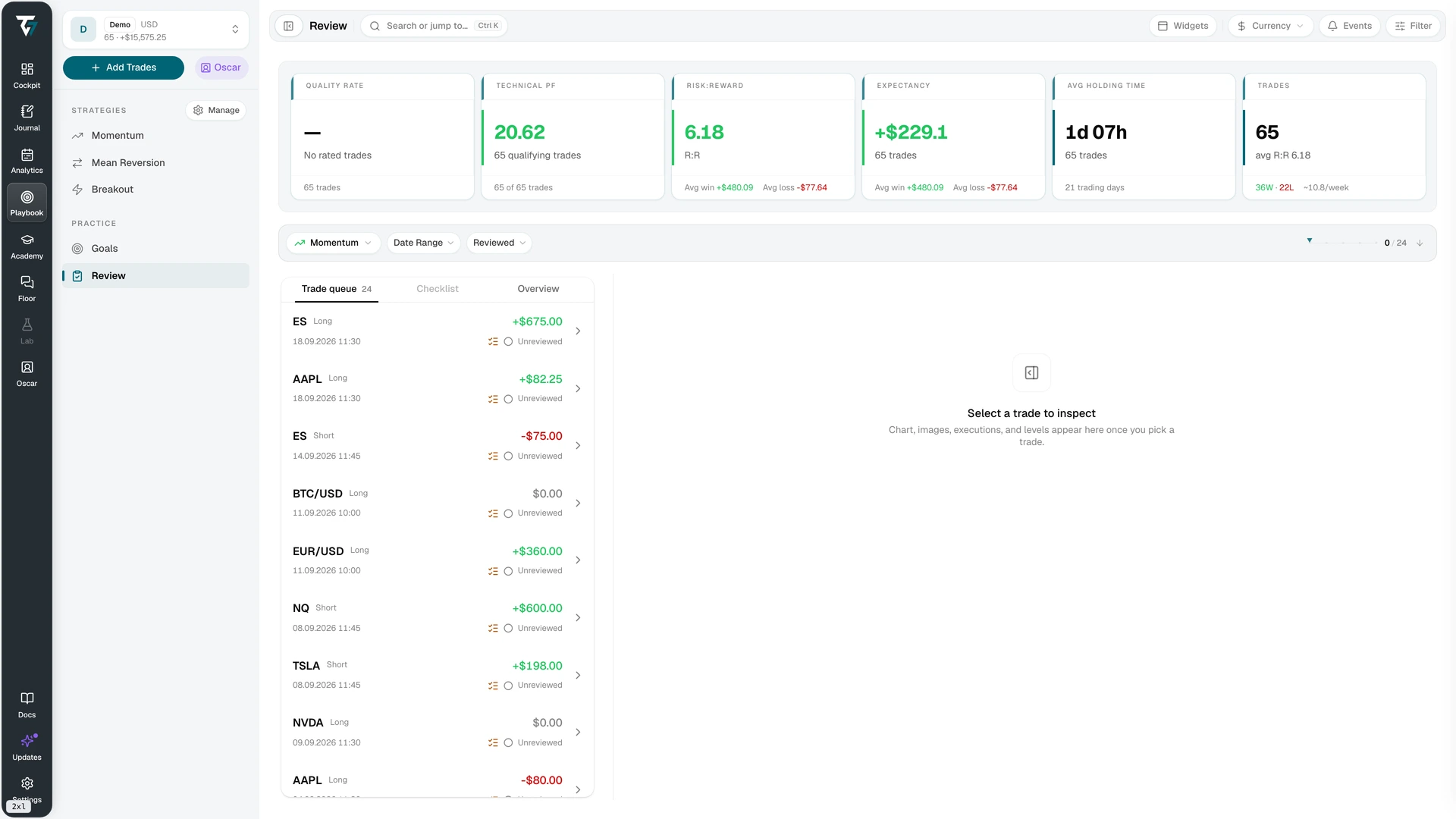
Na área Review da Tradeways, os resultados das regras automáticas vêm do registro do Trade, enquanto você registra as verificações manuais. Antes de marcar um Trade como revisado, examine as regras ainda não verificadas. Depois da revisão, as regras manuais não verificadas contam como falhas. Marque o Trade como não revisado para que elas voltem ao estado não verificado.
Captura existente da demonstração da Tradeways. O filtro de revisão e o estado de cada Trade acompanham o trabalho de revisão separadamente do resultado exibido. Todos os resultados de trading mostrados são dados de demonstração.
Use a lista para encontrar revisões pendentes. Registre também os dados ainda não resolvidos: o indicador de revisão, por si só, não mostra quais registros de origem continuam incompletos.
Os registros de execução podem ser editados na Tradeways. Alterações em execuções, ajustes, instrumentos ou níveis podem recalcular o resultado e as análises do Trade. Confira cada edição com a origem, sem presumir que um registro importado é imutável.
Após uma correção:
Confira as execuções, os custos, o instrumento e os horários afetados com a origem.
Verifique os valores recalculados e os indicadores de dados ausentes.
Revise as notas que copiaram um número antigo ou tiraram uma conclusão com base nele.
Confira os resumos salvos por período. Em uma entrada de sessão da Tradeways, use Gerar resumo novamente para reconstruir o resumo após a alteração no registro do Trade.
Sempre que possível, mantenha os valores calculados no registro do Trade. Se citar um deles em uma nota, inclua a data, o escopo da conta, os filtros, a moeda e a unidade para que outra revisão possa reproduzir a comparação.
Antes de adicionar um campo personalizado, escreva a pergunta que ele deve responder. "Quais entradas ocorreram antes da condição registrada?" pode justificar um campo de desvio bem definido. "Talvez mais detalhes sejam úteis" não explica como preencher ou revisar o campo.
Teste o campo ao longo de um ciclo de revisão. Verifique se os valores estão completos, são consistentes e ajudam a encontrar os Trades correspondentes. Uma explicação mais longa pode ficar em uma nota vinculada, em vez de virar outra classificação.
Use os modelos de diário de trading para notas de Trade, diárias, semanais e de sessão. Esses modelos guardam o contexto do registro estruturado; não precisam repetir cada execução e cálculo.
Uma revisão pode terminar com uma correção, uma pergunta sem resposta ou nenhuma mudança no plano. Resultados históricos, por si só, não justificam aumentar o tamanho da posição nem preveem resultados futuros. Leia a divulgação de riscos da Tradeways antes de usar conclusões do diário para embasar uma decisão de trading.