博客
交易期望值:计算并检查你的样本
根据一组明确定义的 Trade 计算交易期望值。逐步处理成本、结果为 0 的 Trade 和计算器输入,再保存一份可复现的交易日志笔记。
8 分钟阅读Dennis Jahn#术语表#指标
交易涉及风险。Tradeways 提供交易日志和分析软件,不提供投资建议。 阅读风险披露.
相关
博客
根据一组明确定义的 Trade 计算交易期望值。逐步处理成本、结果为 0 的 Trade 和计算器输入,再保存一份可复现的交易日志笔记。
8 分钟阅读Dennis Jahn#术语表#指标
交易涉及风险。Tradeways 提供交易日志和分析软件,不提供投资建议。 阅读风险披露.
相关
我们使用 Cookie(包括分析类)来改进 Tradeways。 · 隐私
历史交易期望值是一个明确定义的样本中每笔 Trade 的平均结果。把扣除成本后的结果相加,再除以 Trade 笔数。正值表示该样本的平均结果为正,但并不能说明下一笔 Trade 或下一个样本会得到什么结果。
要检查这个数字,请保持账户、策略、时间段和单位一致。下面的示例说明如何在交易期望值计算器中处理成本和结果为 0 的 Trade,再把计算内容记录到交易日志中。
使用结果可以核实的已平仓 Trade。纳入所有符合样本定义的 Trade,包括结果为 0 的 Trade。
结果可以用一种账户货币表示,也可以用 R 倍数表示。按每笔 Trade 计算 R 时,先用每笔 Trade 的结果除以它自己的初始风险,再求平均值。不要把货币总额除以一个随意的风险金额,然后称之为平均 R。
下面是一个包含 20 笔已平仓 Trade 的假设样本。每笔 Trade 的初始风险相同,成本均为 0.05R。这些笔数是为了便于核对计算而选的;20 笔 Trade 并不是验证门槛。
| 扣除成本前的结果 | Trade 笔数 | 扣除成本前的合计结果 |
|---|---|---|
| +1.50R | 8 | +12.00R |
| −0.75R | 8 | −6.00R |
| 0R | 4 | 0R |
| 合计 | 20 | +6.00R |
成本为 20 × 0.05R = 1R。只减一次:6R − 1R = 扣除成本后 5R。除以全部 20 笔 Trade,得到每笔 Trade 0.25R。
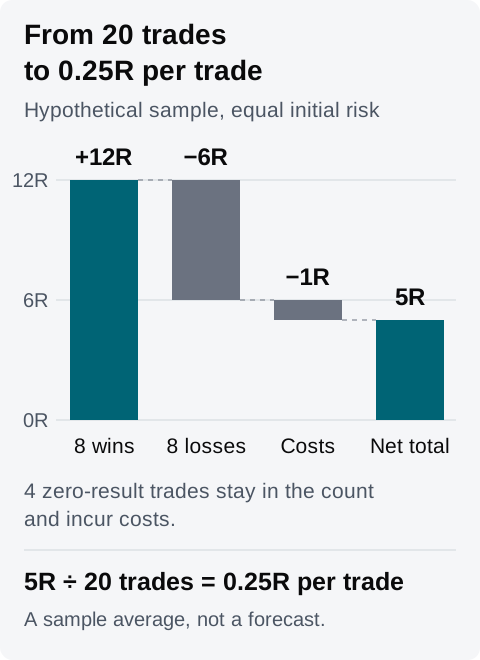
如果记录的 Trade 结果已包含成本,就把这些净结果相加,再除以 20。再次扣除同样的费用会低估平均值。
计算器结合了胜率、平均盈利、平均亏损和每笔成本。它把亏损率设为 100% 减去胜率,因此第二组包含所有未盈利的 Trade。如果样本中有结果为 0 的 Trade,请把它们纳入这一组的平均值。
在这个示例中,8 笔结果为正的 Trade 对应的胜率为 8 ÷ 20 = 40%。其余 12 笔 Trade 包含 8 笔亏损和 4 笔结果为 0 的 Trade。它们的毛亏损合计为 6R,因此计算器的平均亏损输入为 6R ÷ 12 = 0.50R。仅 8 笔亏损 Trade 的平均值是 0.75R,但在此计算器 60% 的未盈利组中,不应使用这个值。
在期望值计算器中输入以下数值:
| 输入 | 数值 | 得出方式 |
|---|---|---|
| 胜率 | 40% | 20 笔中有 8 笔结果为正 |
| 平均盈利 | 1.50R | 12R 除以 8 笔结果为正的 Trade |
| 平均亏损 | 0.50R | 6R 除以 12 笔未盈利 Trade |
| 每笔成本 | 0.05R | 1R 除以全部 20 笔 Trade |
| 交易笔数 | 20 | 所定义样本中的每一笔已平仓 Trade |
计算为 0.40 × 1.50R − 0.60 × 0.50R − 0.05R = 每笔 Trade 0.25R。乘以 20 得到 5R,与上面记录中的总额相同。
这个示例按扣除成本前的结果对 Trade 分组,因为成本是单独扣除的。如果改用扣除成本后的结果,就对这些净结果分组并求平均,同时把单独的成本输入设为 0。在确认交易日志如何归类 Breakeven Trade 之前,不要直接照搬其中的胜率。
保持上面的盈亏和成本输入不变,把胜率改为 30%。计算出的平均值变为 0.30 × 1.50R − 0.70 × 0.50R − 0.05R = 每笔 Trade 0.05R。10 个百分点的变化,使模型平均值降低了 0.20R。
这是一个假设情景,而不是第二个实际观察到的样本。请写明哪些输入来自记录,哪些是你手动更改的。
计算器的预计总额是用平均值乘以你输入的交易笔数。把笔数从 20 改为 200,预计值会从 5R 变为 50R。这不会增加任何 Trade 记录,也不能证明平均值会持续。无论是预计值还是为正的历史平均值,都不能告诉你应使用多大的持仓规模。
使用数字背后的记录,让复盘可以复现:
Widget 的值为空或不完整并不等于 0。解读之前,请先检查缺少哪些输入。Widget 文档说明了账户、筛选和数据状态。
对于上面的假设样本,一份完整的笔记可以这样写:
模拟账户,策略 A,2026 年 9 月 14–18 日,Europe/Zurich。我纳入了符合该范围的全部 20 笔已平仓 Trade。在这个示例中,所有 Trade 的初始风险相同。
扣除成本前:8 笔 +1.50R,8 笔 −0.75R,4 笔 0R。毛总额 6R。成本 1R。净总额 5R,即每笔 Trade 0.25R。
计算器输入:胜率 40%,平均盈利 1.50R,未盈利 Trade 的平均结果 −0.50R(以 0.50R 亏损输入),成本 0.05R,笔数 20。计算器结果与记录总额一致。其中 60% 的亏损率包含 4 笔结果为 0 的 Trade。
我还尝试了一个假设的 30% 胜率,其他盈亏输入不变,结果为每笔 Trade 0.05R。我没有观察到这种情景,也无法确定任一平均值会持续。
使用 Tradeways 交易日志保存你自己的样本及其背后的记录。关于在交易决策中使用历史结果的局限,请阅读风险披露。