Şahin ve güvercin duruş: Aslında ne anlama geliyorlar?
Şahin duruş daha sıkı, güvercin duruş ise daha gevşek para politikasına yönelimi anlatır. Bir merkez bankası açıklamasını önceki açıklamayla karşılaştırarak nasıl etiketleyeceğini, Fed’in Temmuz ve Eylül 2026 açıklamalarıyla işlenmiş bir örnek üzerinden gör.
Tradeways'i geliştirmek için analiz çerezleri dahil çerezler kullanıyoruz. · Gizlilik
Merkez bankası yorumlarında işin büyük bölümünü iki sözcük yapar. Şahin duruş daha sıkı para politikasına, yani daha yüksek faizlere, daha az likiditeye veya daha uzun süren kısıtlamaya yönelimi anlatır. Güvercin duruş ise daha düşük faizlere, daha gevşek para politikasına veya kısıtlamanın daha erken sona ermesine yönelik karşıt eğilimi anlatır. Bir politika açıklaması hakkındaki hemen her değerlendirme, özünde açıklamanın bu iki uç arasında nereye düştüğünü belirleme çabasıdır.
Sözcükler basittir. Hatalar, bunların neye göre ölçüldüğünü unutmaktan doğar.
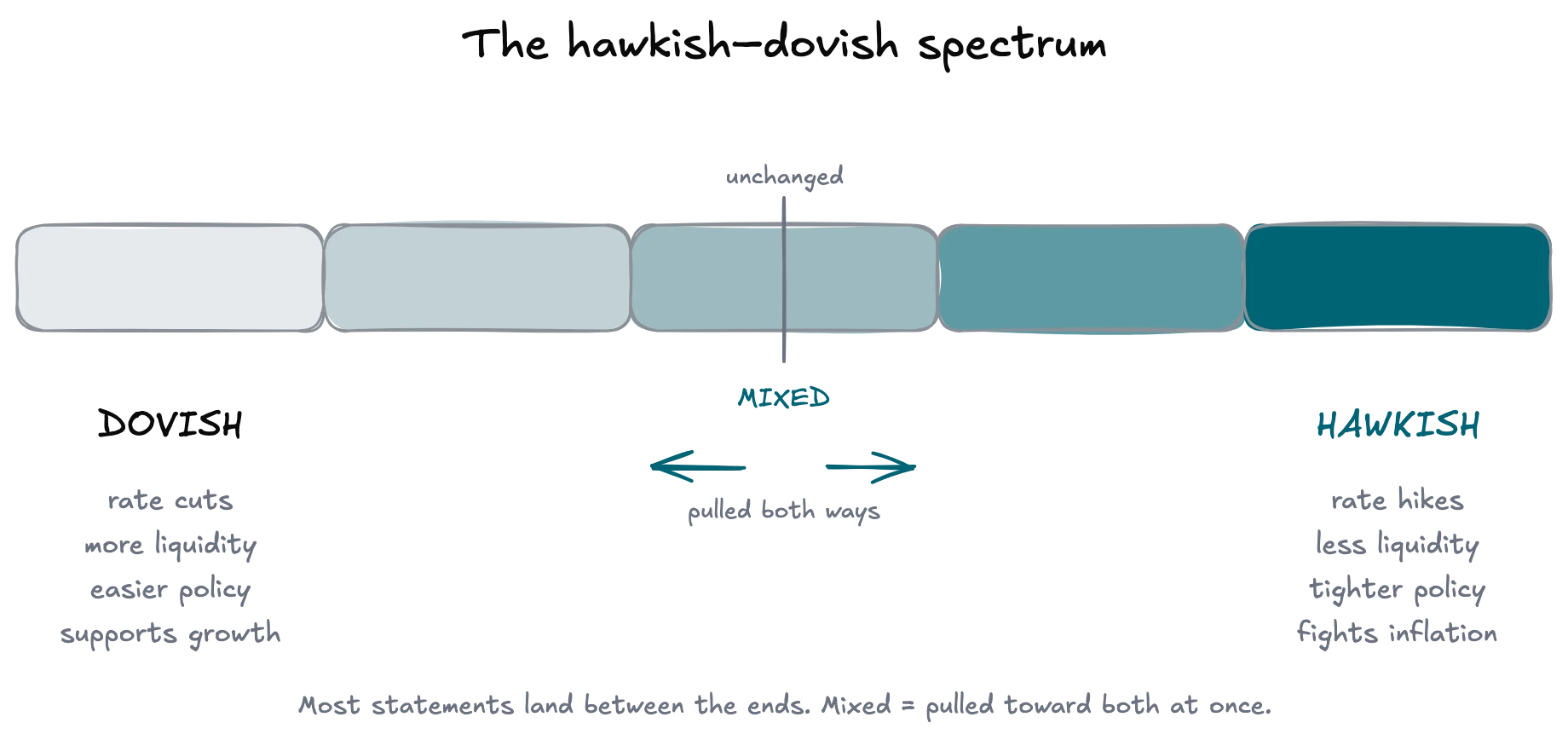
Politika sinyalleri ikili değildir. Bir spektrum üzerinde yer alırlar ve gerçek açıklamaların çoğu uçlarda değil, aralarında bir noktaya düşer.
Şahin ve güvercin duruş aynı ölçeğin iki ucudur. Değişmedi ortada yer alır; karma ise bir açıklamanın aynı anda iki uca doğru çekmesidir.
Şahin sinyaller: faiz artırmak, daha fazla artışa veya "daha uzun süre yüksek" faizlere yönlendirmek, bilançoyu daha hızlı küçültmek, kalıcı ya da genişleyen enflasyonu vurgulamak veya fiyat baskısını sürdürecek kadar sıkı bir iş gücü piyasasına dikkat çekmek.
Güvercin sinyaller: faiz indirmek, daha erken indirimlere yönlendirmek, bilanço küçültmeyi yavaşlatmak veya durdurmak, enflasyonun hedefe döndüğüne dair güven ifade etmek ya da zayıflayan büyüme ve istihdamı vurgulamak.
İyi bir okumayı kötü bir okumadan ayıran nokta budur: Bu sözcükler bir değişim yönünü anlatır ve yön ancak bir referans noktasına göre anlam kazanır.
Bir banka son derece kısıtlayıcı bir politika yürütürken bile, kısıtlamanın daha önce ima ettiğinden erken hafifleyeceğine dair sinyal verirse güvercin bir açıklama yapabilir. Mutlak duruş hâlâ sıkıdır. Değişim ise güvercindir. İkisi aynı anda doğrudur ve farklı soruları yanıtlar:
Politika nerede? Seviye: kısıtlayıcı, nötr veya destekleyici.
Az önce hangi yöne hareket etti? Değişim: şahin, güvercin veya değişmedi.
Faiz değişikliği en güçlü sinyaldir ancak nadiren hikâyenin tamamıdır. Faiz sabit tutulsa bile bir açıklama şu yollarla açıkça şahin veya güvercin okunabilir:
İleriye dönük yönlendirme: Beklenen patika çoğu zaman mevcut karardan daha önemlidir. Faizin tamamen beklendiği gibi sabit tutulması, daha erken indirimlere işaret eden bir yönlendirmeyle güvercin bir toplantıya dönüşebilir.
Oylar: Üyeler sıkılaştırma yönünde karşı oy kullanırsa değişmeyen bir karar şahin yöne kayabilir.
Tahminler ve nokta grafikleri: Faiz patikasındaki veya enflasyon tahminindeki değişim, manşet faizden daha fazla bilgi taşıyabilir.
Bilanço: Faiz sabitken bile daha hızlı bilanço küçültme veya daha yavaş varlık alımı bir sıkılaştırmadır.
Vurgu: Bir banka enflasyonu nasıl açıkladığını ya da görevinin hangi tarafını öne çıkardığını değiştirdiğinde, bir sonraki hamleyi neyin haklı çıkaracağını söylüyordur.
Art arda gelen iki Federal Reserve açıklaması, bu sinyallerin nasıl bir araya geldiğini gösterir. Aşağıdaki alıntılar Federal Reserve’in yayımlanan İngilizce metninden çevrilmiştir ve 2 Ekim 2026’da kontrol edilmiştir.
29 Temmuz 2026 açıklamasında Komite, hedef aralığı 9’a karşı 3 oyla yüzde 3,50 ile 3,75 arasında sabit tuttu. Karşı oy kullanan üçü de "federal fon faizi hedef aralığının çeyrek puan artırılmasını tercih etti". Açıklamada enflasyonun, "kısmen enerji dahil bazı sektörlerde fiyat artışlarına yol açan arz şoklarını yansıtarak" yüksek olduğu belirtildi.
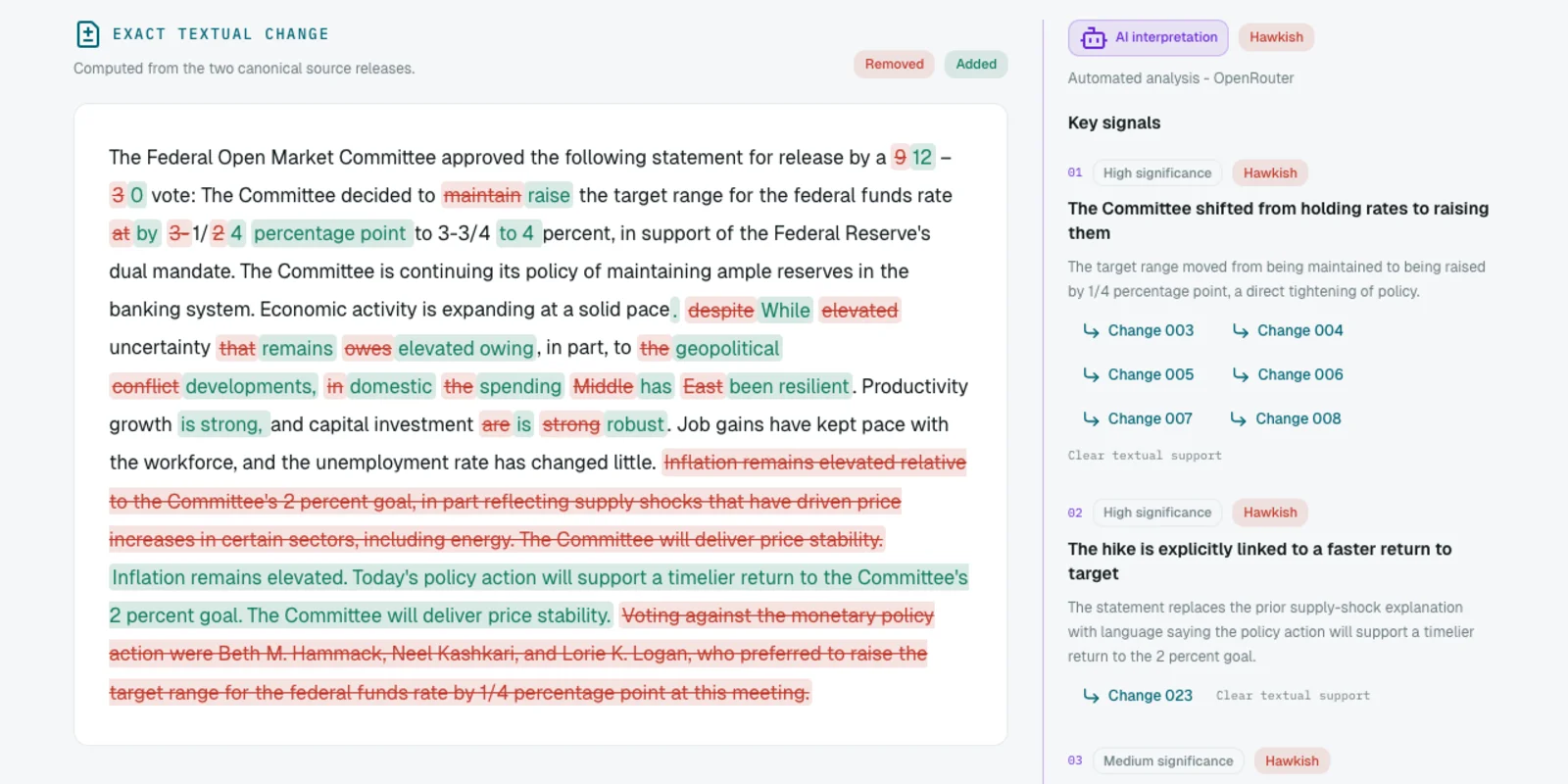
16 Eylül 2026 açıklamasında Komite, aralığı çeyrek puan artırarak yüzde 3,75 ile 4,00 arasına yükseltti. Oylama 12’ye karşı 0 ile sonuçlandı. Arz şoku açıklaması kalktı. Enflasyon "yüksek seyrini koruyor" ve yeni bir cümlede şöyle deniyor: "Bugünkü politika adımı, Komite’nin yüzde 2 hedefine daha zamanında dönüşü destekleyecek."
16 Eylül 2026 FOMC açıklamasının Tradeways Macro’da 29 Temmuz ile karşılaştırması. Kırmızı çıkarılan metni, yeşil eklenen metni gösterir.
Her değişikliği önceki açıklamaya göre oku:
Sinyal
29 Temmuz 2026
16 Eylül 2026
Değişimin yönü
Karar
Yüzde 3,50 ile 3,75’te sabit
Çeyrek puan artışla yüzde 3,75 ile 4,00
Şahin
Oylama
9’a karşı 3, üç karşı oyun tamamı artış yönünde
12’ye karşı 0
Şahin
Vurgu
Enflasyon kısmen arz şoklarıyla açıklanıyor
Arz şoku açıklaması kaldırıldı
Şahin
Yönlendirme
Politika adımının ne işe yaradığına dair cümle yok
Adım yüzde 2’ye "daha zamanında dönüşü destekleyecek"
Şahin
Belirleyici her değişiklik aynı yöne işaret ettiği için etiket Temmuz’a göre şahindir. Örnek, referans noktasının neden önemli olduğunu da gösterir. Temmuz bir sabit tutma kararıydı ve manşette nötr görünür. Artış yönündeki üç karşı oy onu şahin eğilimli bir sabit tutmaya dönüştürdü; Eylül artışı ise politikayı bu karşı oy kullanan üyelere doğru taşıdı.
Tablo seviye sorusunu yanıtlamaz. Yüzde 3,75 ile 4,00 aralığının kısıtlayıcı olup olmadığı, bankanın kendi nötr faiz tahminine ve verilere bağlıdır; açıklama metni bunu belirlemez.
Gerçek kararlar çoğu zaman karşıt baskılar taşır: zayıf büyümeye karşı yüksek enflasyon, devam eden varlık alımlarıyla birlikte faiz artışı, yapışkan ücretlerle birlikte zayıf faaliyet. Anlamlı şahin ve güvercin değişimler bir arada bulunuyor ve hiçbiri açıkça ağır basmıyorsa dürüst etiket karmadır. Gerçekten çelişkili bir açıklamayı zorla yalnızca şahin veya güvercin diye sınıflandırmak, kendinden emin görünen okumaların yanlış çıkmasına yol açar.
Yeni açıklamayı aynı bankanın önceki açıklamasının yanına koy. Aynı belge türünü karşılaştır; örneğin açıklamayı açıklamayla.
Karardaki, oylamadaki, yönlendirmedeki, tahminlerdeki veya bilançodaki ve vurgudaki değişiklikleri listele.
Her değişikliği şahin, güvercin veya nötr olarak işaretle. Aynı anlamı yalnızca farklı sözcüklerle anlatan düzenlemeleri yok say.
Etiketi karşılaştırma olarak yaz; örneğin "Temmuz’a göre şahin". Etiketi belirleyen iki veya üç değişikliği belirt. Değişiklikler iki yöne de işaret ediyor ve hiçbiri ağır basmıyorsa karma kullan.
Politika okumasını piyasa öngörüsünden ayrı tut. Bir para biriminin, getirinin veya endeksin etiketin yönünde hareket edip etmeyeceği, kendi kanıtı olan ayrı bir sorudur.
Tradeways Macro, kapsadığı her merkez bankası için ilk adımı yapar. Bir açıklama ile bankanın aynı türdeki önceki açıklaması arasındaki tam ifade değişikliklerini hesaplar ve redline olarak gösterir. Ardından bir yapay zekâ yorumu etiket önerir (şahin, güvercin, değişmedi veya karma) ve arkasındaki değişiklikleri belirtir. Redline kaynak metinden hesaplanır; etiketi yapay zekâ üretir, bu yüzden güvenmeden önce değişen bölümlerle karşılaştır. Eylül 2026 FOMC karşılaştırması yukarıdaki örnektir.