Zrealizowany i niezrealizowany P&L: jak uzgodnić wynik Trade
Oddziel zrealizowany P&L od wyceny otwartej części pozycji i uzgodnij wynik brutto oraz netto dla pozycji otwartych, częściowo zamkniętych i zamkniętych.
Trading wiąże się z ryzykiem. Tradeways udostępnia oprogramowanie do prowadzenia dziennika i analizy danych, nie świadczy natomiast doradztwa inwestycyjnego. Przeczytaj ujawnienie ryzyka.
Używamy plików cookie, w tym analitycznych, aby ulepszyć Tradeways. · Prywatność
Zrealizowany P&L to zysk lub strata z zamkniętej części pozycji. Niezrealizowany P&L to zysk lub strata z części, która pozostaje otwarta, obliczona według bieżącej ceny wyceny. Pozycja częściowo zamknięta może mieć jednocześnie oba wyniki.
Zrealizowany P&L opisuje zakończoną część Trade. Niezrealizowany P&L pokazuje wycenę części otwartej. Nie dodawaj ich bez sprawdzenia, czy używają tej samej waluty, sposobu uwzględniania opłat, ilości pozycji i czasu wyceny.
Zrealizowany wynik nie zawsze oznacza wynik netto. Zrealizowany P&L brutto wynika z dopasowanych realizacji wejścia i wyjścia. Zrealizowany P&L netto uwzględnia również obsługiwane prowizje i korekty. Przed porównaniem dwóch sum sprawdź, którą wartość pokazuje zestawienie Brokera, dziennik lub wykres.
Niezrealizowany P&L zależy od ceny wyceny i zmienia się wraz z nią. Brakująca, opóźniona lub pochodząca z innego źródła cena może sprawić, że dwa systemy pokażą inny otwarty P&L mimo zgodnych realizacji.
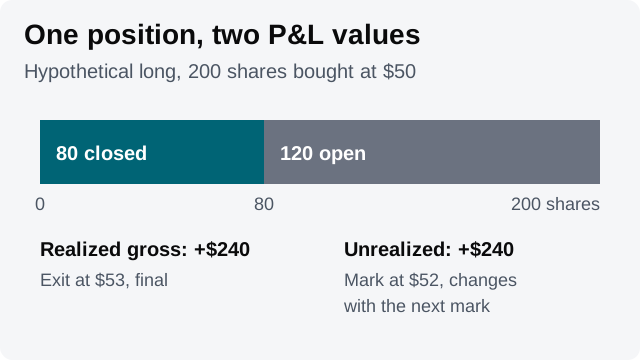
Załóżmy, że kupujesz 200 akcji po $50, sprzedajesz 80 po $53, a pozostałe 120 jest wyceniane po $52. Przykład dotyczy akcji z mnożnikiem kontraktu równym jeden i nie uwzględnia opłat.
Dopasuj zamkniętą ilość. Sprzedaż zamyka 80 z 200 akcji.
Oblicz zrealizowany P&L brutto dla tych 80 akcji: (53 - 50) × 80 = $240.
Oblicz niezrealizowany P&L dla pozostałych 120 akcji: (52 - 50) × 120 = $240.
Zachowaj obie wartości osobno. Trade ma $240 zrealizowanego P&L brutto oraz $240 niezrealizowanego P&L przy podanej cenie wyceny.
Hipotetyczny Trade. Zamkniętą i otwartą ilość wycenia się osobno: część zrealizowaną według ceny wyjścia, a część otwartą według ceny wyceny.
Jeśli później sprzedasz pozostałe 120 akcji po $51,50, drugie wyjście zrealizuje (51.50 - 50) × 120 = $180. Końcowy zrealizowany P&L brutto wynosi $420. Niezrealizowany P&L znika, ponieważ pozycja jest wyzerowana.
Dla pozycji Short korzystny kierunek ceny jest odwrotny. W przypadku futures, Forex, kryptowalut i CFD zmianę ceny trzeba przeliczyć przy użyciu skonfigurowanej wartości Ticka, punktu, Lotu lub kontraktu. Nie stosuj wzoru dla akcji do wszystkich typów instrumentów.
Tradeways nazywa bieżącym P&L wycenę otwartej ilości. Wymaga ona ceny wyceny od Brokera. Obecnie takie ceny pochodzą wyłącznie z sekcji Open Positions w zapytaniu Activity Flex Query w Interactive Brokers i tylko dla pozycji w akcjach i ETF. Otwarty Trade bez ceny wyceny pokazuje wyłącznie zrealizowany P&L. Dotyczy to Trade z innych importów, Trade z Interactive Brokers zaimportowanych bez sekcji Open Positions oraz pozycji innych niż akcje i ETF.
Weźmy Trade z powyższego przykładu, przed drugą sprzedażą, z prowizją $1 zapisaną przy każdej z dwóch realizacji. Importujesz realizacje razem z raportem Open Positions z datą 30 września, który wycenia akcje po $52.
Wartość w Trade
Obliczenie
Kwota
Zrealizowany P&L brutto
(53 - 50) × 80
$240
Bieżący P&L przy wycenie z 30 września
(52 - 50) × 120
$240
P&L brutto
240 + 240
$480
Prowizja
$1 przy każdej z dwóch realizacji
−$2
P&L netto w nagłówku Trade
480 - 2
$478
W trybie wyświetlania w walucie nagłówek Trade pokazuje $478 jako P&L netto, a pod nim „Bieżący P&L na dzień” i datę raportu. Ta kwota zawiera część bieżącą. Data dotyczy wyceny, a nie chwili otwarcia strony. Tradeways używa ceny wyceny z daty raportu z pliku, a nie notowania na żywo, więc bieżący wynik pozostaje na poziomie $240, dopóki nie zaimportujesz nowszego raportu. Niezrealizowany P&L z pliku Brokera służy wyłącznie do porównania; Tradeways przelicza bieżący P&L na podstawie otwartych partii FIFO w Twoim dzienniku.
Część bieżąca nie trafia też do wyników, które wymagają ostatecznego rezultatu. Kalendarz, wskaźnik wygranych i pozostałe statystyki uwzględniają wyłącznie zamknięte Trade. Saldo konta obejmuje ostatni dostępny bieżący P&L dla pozycji z ceną wyceny i informuje o tym.
Po zamknięciu pozycji cena wyceny jest usuwana. Jeśli druga sprzedaż po $51,50 również wiąże się z prowizją $1, P&L netto wynosi końcowe $420 brutto minus $3 prowizji, czyli $417, a etykieta bieżącego P&L znika.
Gdy pozycja ma wejścia po różnych cenach, metoda dopasowania określa, którą ilość wejściową zamyka wyjście. Tradeways stosuje FIFO, czyli zasadę „pierwsze weszło, pierwsze wyszło”. Najpierw dopasowuje najstarszą otwartą ilość.
Rozważ dwa wejścia po 100 akcji, pierwsze po $50, a drugie po $54. Sprzedaż 120 akcji po $55 zamyka według FIFO wszystkie 100 akcji z wejścia po $50 oraz 20 akcji z wejścia po $54. Pozostaje otwarte 80 akcji z drugiego wejścia. Zrealizowany P&L pochodzi z dwóch dopasowanych części. Niezrealizowany P&L wykorzystuje pozostałe 80 akcji i bieżącą cenę wyceny.
Jeśli inna platforma stosuje inną metodę dopasowania, podział na wynik zrealizowany i niezrealizowany może się różnić przed pełnym zamknięciem pozycji. Zanim uznasz któryś wynik za błędny, porównaj realizacje, metodę dopasowania i pozostałe partie.
Zrealizowany P&L brutto to wynik ruchu ceny dopasowanych realizacji przed prowizją.
Zrealizowany P&L netto uwzględnia obsługiwane prowizje i korekty.
Niezrealizowany P&L wycenia otwartą ilość według ceny wyceny.
Łączny P&L według wyceny łączy zrealizowany i niezrealizowany P&L tylko wtedy, gdy zgadzają się waluta i sposób uwzględniania kosztów.
Opłaty mogą pojawić się w innej walucie lub z inną datą. Jeśli brakuje wymaganego kursu, dziennik może pominąć tę kwotę i oznaczyć sumę jako niepełną. Niepełna suma nie oznacza zera.
Trade może więc zakończyć się jednym zrealizowanym wynikiem, a jednocześnie mieć inne wartości MFE i MAE. Jeśli brakuje danych rynkowych lub obliczenia nie są zakończone, wskaźniki odchylenia mogą pozostać oczekujące. Pokazuj źródło i stan danych zamiast traktować brakującą wartość jako zero.
Tradeways oblicza zrealizowany P&L na podstawie dopasowanych realizacji i może dodać wycenę otwartej części, gdy cena wyceny jest dostępna. W Szczegółach Trade porównaj realizacje, wartości brutto i netto, korekty oraz stan wskaźników odchylenia, zanim użyjesz wyniku w przeglądzie.