Il trading comporta dei rischi. Tradeways fornisce software per tenere un diario e analizzare i dati, non consulenza sugli investimenti. Leggi l'informativa sui rischi.
Usiamo cookie, inclusi quelli di analisi, per migliorare Tradeways. · Privacy
Il P&L realizzato è il profitto o la perdita sulla Quantità già chiusa. Il P&L non realizzato riguarda la Quantità ancora aperta, valutata a un prezzo corrente. Una Posizione chiusa solo in parte può avere entrambi nello stesso momento.
Usa il P&L realizzato per la parte completata del Trade e quello non realizzato per il valore corrente della parte aperta. Non sommarli senza verificare che usino la stessa Valuta, lo stesso trattamento dei costi, la stessa Quantità e lo stesso orario di valutazione.
Realizzato non significa sempre netto. Il P&L lordo realizzato deriva dall'abbinamento delle Esecuzioni di Ingresso e Uscita. Il P&L netto realizzato include anche commissioni e rettifiche supportate. Prima di confrontare due totali, controlla quale valore mostra l'estratto del Broker, il Diario o il grafico.
Il P&L non realizzato dipende da un prezzo di valutazione. Cambia quando cambia quel prezzo. Un dato mancante, ritardato o proveniente da una fonte diversa può produrre valori diversi anche quando le Esecuzioni coincidono.
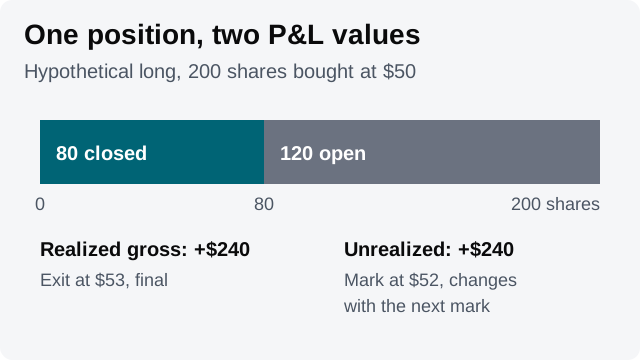
Supponi di acquistare 200 azioni a $50, venderne 80 a $53 e valutare le 120 rimanenti a $52. L'esempio usa un moltiplicatore di uno ed esclude i costi.
Abbina la Quantità chiusa. La vendita chiude 80 delle 200 azioni.
Calcola il P&L lordo realizzato sulle 80 azioni: (53 - 50) × 80 = $240.
Calcola il P&L non realizzato sulle 120 azioni rimanenti: (52 - 50) × 120 = $240.
Mantieni separati i valori. Il Trade ha $240 di P&L lordo realizzato e $240 di P&L non realizzato al prezzo indicato.
Trade ipotetico. La Quantità chiusa e quella aperta sono valutate separatamente: la parte realizzata al prezzo di Uscita, la parte aperta al prezzo di valutazione.
Se vendi poi le 120 azioni residue a $51,50, la seconda Uscita realizza (51.50 - 50) × 120 = $180. Il P&L lordo realizzato finale è $420. Non resta P&L non realizzato perché la Posizione è azzerata.
Per una Posizione Short, la direzione favorevole è opposta. Per Futures, Forex, Cripto e CFD, la variazione di prezzo va convertita usando i valori configurati di Tick, punto, Lotto o contratto. Non applicare a tutti gli strumenti una formula per le Azioni.
Tradeways chiama P&L corrente il valore di valutazione della Quantità aperta. Serve un prezzo di riferimento del Broker. Per ora questi prezzi provengono solo dalla sezione Open Positions di una Activity Flex Query di Interactive Brokers e solo per le Posizioni su azioni ed ETF. Un Trade aperto senza prezzo di riferimento mostra solo il P&L realizzato. Vale per i Trade provenienti da altre importazioni, per i Trade Interactive Brokers importati senza la sezione Open Positions e per le Posizioni diverse da azioni ed ETF.
Riprendi il Trade di sopra, prima della seconda vendita, con $1 di commissione registrata su ciascuna delle due Esecuzioni. Importi le Esecuzioni insieme a un report Open Positions datato 30 settembre che valuta l'azione a $52.
Valore nel Trade
Calcolo
Importo
P&L lordo realizzato
(53 - 50) × 80
$240
P&L corrente al prezzo di riferimento del 30 settembre
(52 - 50) × 120
$240
P&L lordo
240 + 240
$480
Commissione
$1 su ciascuna delle due Esecuzioni
−$2
P&L netto nell'intestazione del Trade
480 - 2
$478
Nella modalità di visualizzazione in valuta, l'intestazione del Trade mostra $478 come P&L netto, con "P&L corrente · al" e la data del report sotto. Questo valore include la parte corrente. La data appartiene al prezzo di riferimento, non al momento in cui apri la pagina. Tradeways usa il prezzo di riferimento alla data del report contenuto nel file, non una quotazione in tempo reale, quindi il valore corrente resta a $240 finché non importi un report più recente. Il P&L non realizzato presente nel file del Broker è conservato solo per il confronto; Tradeways ricalcola il P&L corrente dai Lotti FIFO ancora aperti nel tuo Diario.
La parte corrente resta anche fuori dai risultati che richiedono un esito definitivo. Il calendario, la percentuale di successo e le altre statistiche contano solo i Trade chiusi. Il saldo del Conto include l'ultimo P&L corrente disponibile per le Posizioni aperte con prezzo di riferimento e lo indica quando lo fa.
Quando la Posizione viene chiusa, il prezzo di riferimento viene rimosso. Se anche la seconda vendita a $51,50 ha $1 di commissione, il P&L netto diventa il P&L lordo finale di $420 meno $3 di commissioni, cioè $417, e l'etichetta del P&L corrente scompare.
Con Ingressi a prezzi diversi, il metodo di abbinamento determina quale Quantità viene chiusa da un'Uscita. Tradeways usa il metodo first in, first out, o FIFO, quindi abbina per prima la Quantità aperta da più tempo.
Considera due Ingressi da 100 azioni, il primo a $50 e il secondo a $54. Una vendita di 120 azioni a $55 chiude tutte le 100 azioni del primo Ingresso e 20 del secondo. Restano aperte 80 azioni del secondo Ingresso. Il P&L realizzato deriva dalle due parti abbinate. Quello non realizzato usa le 80 azioni residue e il prezzo corrente.
Se un'altra piattaforma usa un metodo diverso, la ripartizione può differire finché la Posizione non è completamente chiusa. Confronta Esecuzioni, metodo di abbinamento e Lotti residui prima di considerare errato un risultato.
P&L lordo realizzato: risultato della variazione di prezzo abbinata prima delle commissioni.
P&L netto realizzato: include commissioni e rettifiche supportate.
P&L non realizzato: valuta la Quantità aperta a un prezzo corrente.
P&L totale valutato: somma P&L realizzato e non realizzato solo se Valuta e trattamento dei costi coincidono.
I costi possono essere in un'altra Valuta o riferiti a un'altra data. Se manca il tasso di cambio necessario, il Diario può escludere l'importo e indicare il totale come incompleto. Un totale incompleto non equivale a zero.
Un Trade può quindi chiudersi con un risultato realizzato e mostrare valori MFE e MAE diversi. Se mancano dati di mercato o il calcolo non è completo, le metriche possono restare in sospeso. Mantieni visibile questa provenienza invece di trattare un dato mancante come zero.
Tradeways calcola il P&L realizzato dalle Esecuzioni abbinate e può aggiungere il P&L non realizzato quando è disponibile un prezzo corrente. In Dettaglio Trade, confronta Esecuzioni, valori lordi e netti, rettifiche e stato delle metriche prima di usare il numero in una Valutazione.