Hawkish vs. dovish: ano talaga ang ibig sabihin ng mga ito
Ang hawkish ay pagkiling sa mas mahigpit na money policy; ang dovish ay pagkiling sa mas maluwag. Alamin kung paano lagyan ng label ang statement ng central bank kumpara sa nauna, gamit ang mga statement ng Fed noong Hulyo at Setyembre 2026 bilang halimbawa.
·6 min na binasa·Dennis Jahn·#Mga batayan#Glosaryo
May kaakibat na risk ang trading. Nagbibigay ang Tradeways ng software para sa journaling at analytics, hindi ng investment advice. Basahin ang risk disclosure.
Gumagamit kami ng mga cookie, kabilang ang mga analytics, upang mapabuti ang Tradeways. · Pribasiya
Dalawang salita ang gumagawa sa karamihan ng trabaho sa central-bank commentary. Inilalarawan ng hawkish ang pagkiling sa mas mahigpit na money policy: mas mataas na rates, mas kaunting liquidity, o restriction na mas matagal. Inilalarawan ng dovish ang kabaligtarang pagkiling, patungo sa mas mababang rates, mas maluwag na money policy, o mas maagang pagtatapos ng restriction. Sa ilalim ng halos bawat pagsusuri sa policy statement ay ang pagtatangkang ilagay ito sa pagitan ng dalawang dulo na iyon.
Simple ang mga salita. Nagsisimula ang mga pagkakamali kapag nakalimutan kung ano ang pinaghahambingan ng mga ito.
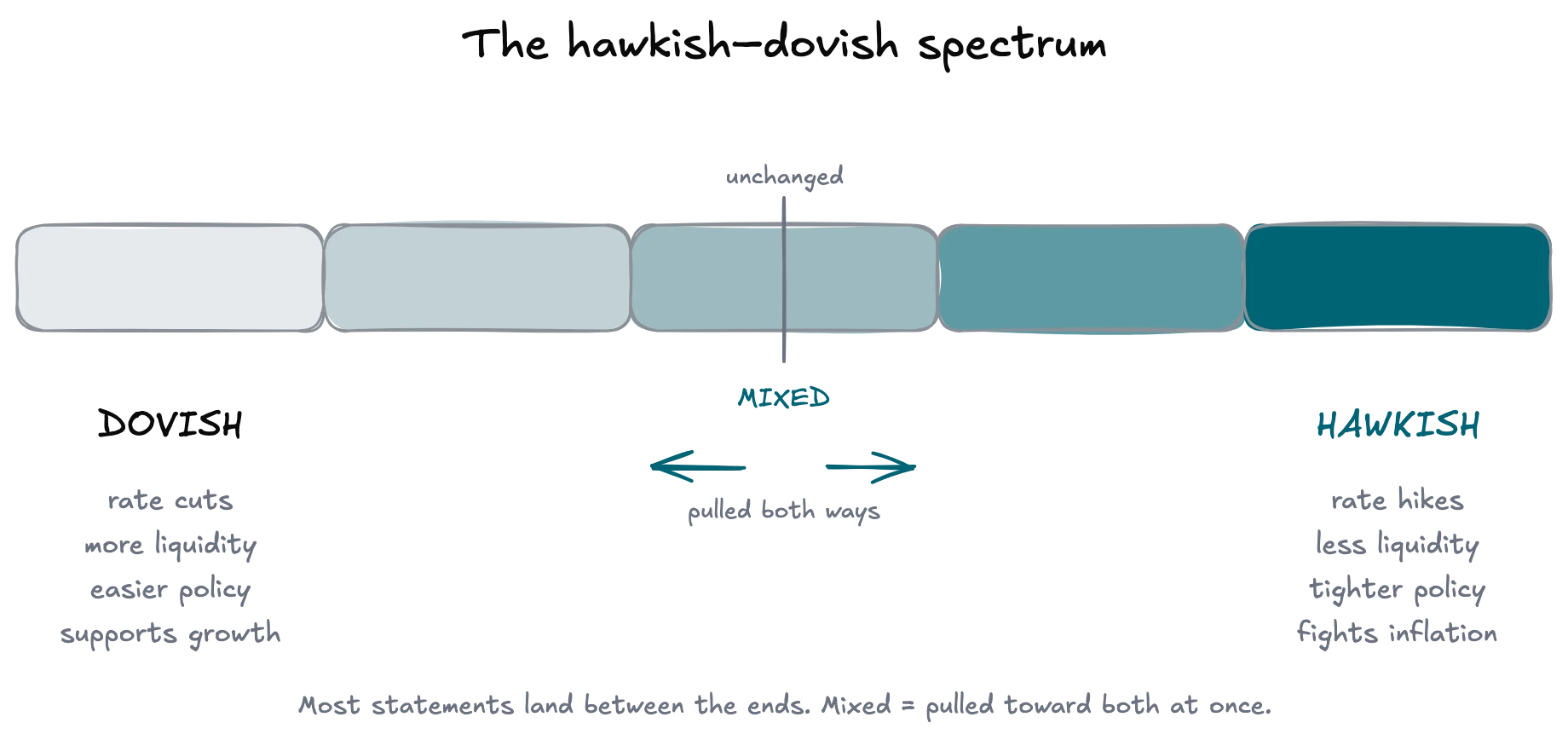
Hindi binary ang policy signals. Nasa spectrum ang mga ito, at karamihan ng totoong statement ay nasa pagitan ng dalawang dulo.
Hawkish at dovish ang dalawang dulo ng iisang scale. Nasa gitna ang unchanged; mixed kapag sabay na humihila ang statement sa magkabilang dulo.
Mga hawkish signal: pagtataas ng rates, paggabay sa mas marami pang hike o "higher for longer," mas mabilis na pagpapaliit ng balance sheet, pagbibigay-diin sa nagpapatuloy o lumalawak na inflation, o pagtukoy sa napakahigpit na labor market na nagpapanatili ng price pressure.
Mga dovish signal: pagbababa ng rates, paggabay sa mas maagang cuts, pagbagal o paghinto ng balance-sheet runoff, pagpapahayag ng kumpiyansang bumabalik sa target ang inflation, o pagbibigay-diin sa humihinang growth at employment.
Ito ang pagkakaibang naghihiwalay sa tama at maling pagbasa: inilalarawan ng mga salitang ito ang direksyon ng pagbabago, at may kahulugan lang ang direksyon kapag ikinumpara sa reference point.
Maaaring magpatupad ang isang bank ng napakahigpit na policy pero maglabas pa rin ng dovish statement, basta ipinahihiwatig nitong luluwag ang restriction nang mas maaga kaysa sa dati nitong sinabi. Mahigpit pa rin ang absolute stance. Dovish ang pagbabago. Sabay na tama ang dalawa at magkaiba ang sinasagot na tanong:
Nasaan ang policy? Ang level: restrictive, neutral, o accommodative.
Saang direksyon ito gumalaw? Ang pagbabago: hawkish, dovish, o unchanged.
Ang rate move ang pinakamalakas na signal pero bihira itong maging buong kuwento. Maaaring i-hold ng statement ang rate pero malinaw pa ring maging hawkish o dovish sa pamamagitan ng:
Forward guidance: madalas na mas mahalaga ang expected path kaysa kasalukuyang desisyon. Dovish meeting ang isang lubos na inaasahang hold na may guidance patungo sa mas maagang cuts.
Votes: maaaring maging hawkish ang unchanged decision kung may mga member na nag-dissent pabor sa tightening.
Projections at dot plots: maaaring mas maraming impormasyon ang shifted rate path o inflation forecast kaysa headline rate.
Balance sheet: tightening ang mas mabilis na runoff o mas mabagal na purchases kahit naka-hold ang rate.
Emphasis: kapag binago ng bank kung paano nito ipinapaliwanag ang inflation o kung aling panig ng mandate nito ang binibigyang-diin, sinasabi nito kung ano ang magbibigay-katwiran sa susunod na galaw.
Ipinapakita ng dalawang magkasunod na statement ng Federal Reserve kung paano nagsasama ang mga signal na ito. Galing sa inilathalang text ng Federal Reserve ang mga sipi sa ibaba, na tiningnan noong 2 Oktubre 2026.
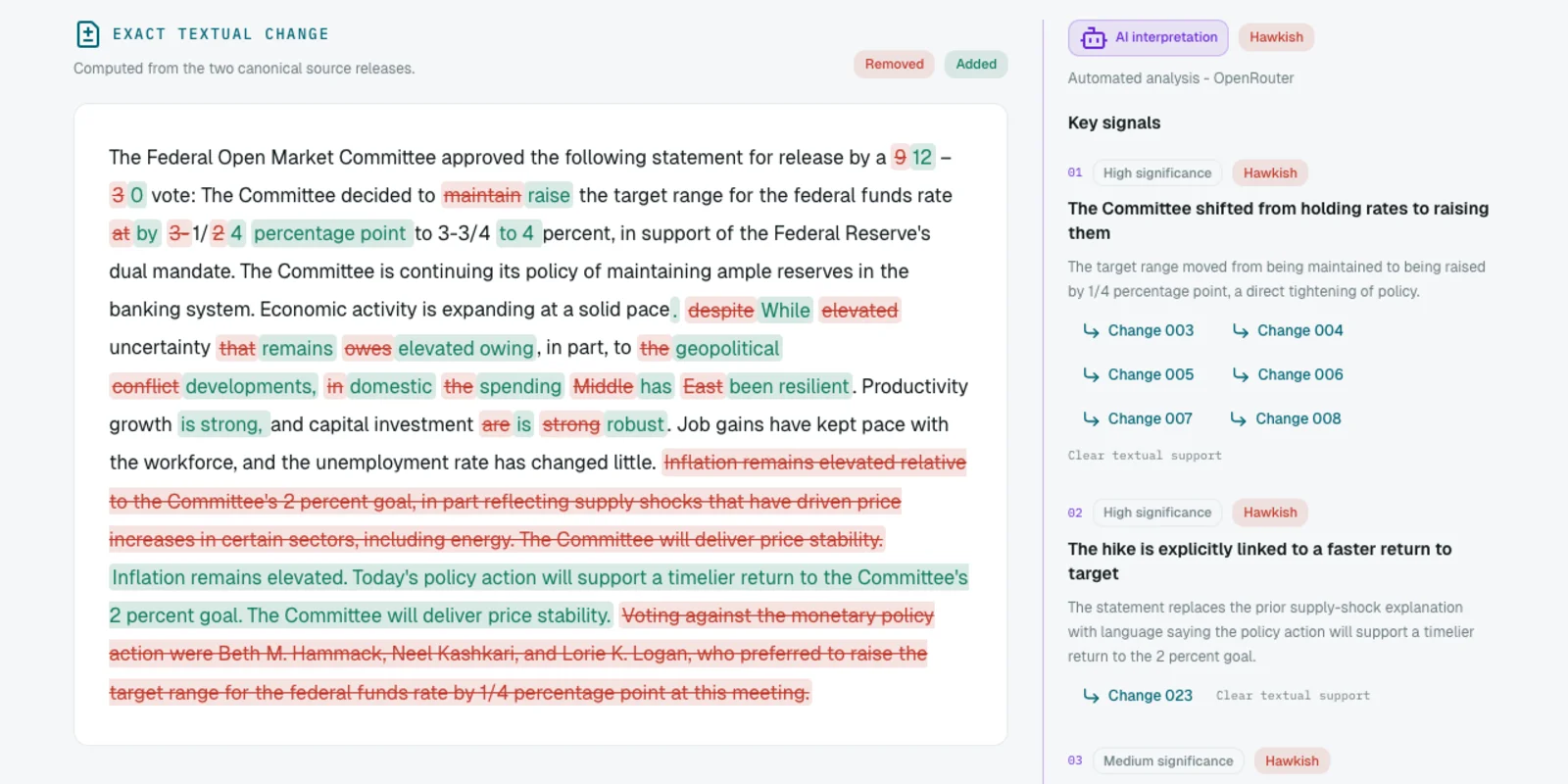
Sa statement noong Hulyo 29, 2026, pinanatili ng Committee ang target range sa 3-1/2 hanggang 3-3/4 percent sa botong 9 laban sa 3. Ang tatlong dissenter ay "preferred to raise the target range for the federal funds rate by 1/4 percentage point," o mas pinili nilang itaas ang target range ng federal funds rate nang 1/4 percentage point. Sinabi ng statement na elevated ang inflation, "in part reflecting supply shocks that have driven price increases in certain sectors, including energy," o bahagyang bunga ng mga supply shock na nagtulak sa pagtaas ng presyo sa ilang sektor, kabilang ang energy.
Sa statement noong Setyembre 16, 2026, itinaas ng Committee ang range nang 1/4 percentage point sa 3-3/4 hanggang 4 percent sa botong 12 laban sa 0. Wala na ang paliwanag na supply shock. Nananatiling elevated ang inflation ("remains elevated"), at may bagong pangungusap: "Today's policy action will support a timelier return to the Committee's 2 percent goal," ibig sabihin, susuportahan ng aksyon sa patakaran ngayong araw ang mas maagang pagbabalik sa 2 percent na layunin ng Committee.
Ang FOMC statement noong Setyembre 16, 2026 kumpara sa Hulyo 29 sa Tradeways Macro. Pula ang inalis na text, berde ang idinagdag na text.
Basahin ang bawat pagbabago kumpara sa nakaraang statement:
Signal
Hulyo 29, 2026
Setyembre 16, 2026
Direksyon ng pagbabago
Decision
Hold sa 3-1/2 hanggang 3-3/4 percent
Hike na 1/4 point sa 3-3/4 hanggang 4 percent
Hawkish
Vote
9 laban sa 3, lahat ng tatlong dissent ay pabor sa hike
12 laban sa 0
Hawkish
Emphasis
Bahagyang ipinaliwanag ang inflation ng mga supply shock
Inalis ang paliwanag na supply shock
Hawkish
Guidance
Walang pangungusap kung ano ang ginagawa ng policy action
Ang aksyon ay "will support a timelier return" sa 2 percent
Hawkish
Iisa ang direksyon ng bawat pagbabagong nagpasya, kaya ang label ay hawkish kumpara sa Hulyo. Ipinapakita rin ng halimbawa kung bakit mahalaga ang reference point. Hold ang Hulyo, na mukhang neutral sa headline. Dahil sa tatlong dissent na pabor sa hike, naging hold ito na nakahilig sa hawkish, at inilipat ng hike noong Setyembre ang policy patungo sa mga dissenter na iyon.
Hindi sinasagot ng table ang tanong tungkol sa level. Kung restrictive ang range na 3-3/4 hanggang 4 percent, nakadepende iyon sa sariling estimate ng bank sa neutral at sa data, na hindi nalulutas ng text ng statement.
Madalas na may magkasalungat na pressure ang totoong decisions: mataas na inflation laban sa mahinang growth, hike kasabay ng nagpapatuloy na asset purchases, o mahinang activity na may nananatiling mataas na wages. Kapag sabay na may makabuluhang hawkish at dovish changes at walang malinaw na nangingibabaw, mixed ang tapat na label. Ang pagpilit ng malinis na hawkish-o-dovish call sa isang tunay na magkasalungat na statement ang dahilan kung bakit nagkakamali ang mga pagbasa na mukhang tiyak.
Ilagay ang bagong statement sa tabi ng nauna mula sa parehong bank. Ihambing ang parehong uri ng dokumento, gaya ng statement sa statement.
Ilista ang mga pagbabago sa decision, vote, guidance, projections o balance sheet, at emphasis.
Markahan ang bawat pagbabago bilang hawkish, dovish, o neutral. Huwag pansinin ang mga edit na nagpapalit lang ng pananalita pero iisa ang kahulugan.
Isulat ang label bilang paghahambing, gaya ng "hawkish kumpara sa Hulyo," at pangalanan ang dalawa o tatlong pagbabagong nagpasya rito. Gamitin ang mixed kapag magkasalungat ang direksyon ng mga pagbabago at walang nangingibabaw.
Ihiwalay ang policy read sa anumang market call. Kung gumagalaw ang currency, yield, o index sa direksyon ng label, hiwalay na tanong iyon na may sarili nitong ebidensya.
Ang Tradeways Macro ang gumagawa ng unang hakbang para sa bawat central bank na sakop nito. Kinakalkula nito ang eksaktong pagbabago sa wording sa pagitan ng isang release at ng nakaraang release ng bank na may parehong uri, at ipinapakita ang mga ito bilang redline. Pagkatapos, may AI interpretation na nagmumungkahi ng label (hawkish, dovish, unchanged, o mixed) at binabanggit ang mga pagbabago sa likod nito. Kinakalkula ang redline mula sa source text; AI ang bumubuo ng label, kaya suriin ito laban sa mga nabagong talata bago ka umasa rito. Ang paghahambing ng FOMC noong Setyembre 2026 ang halimbawa sa itaas.