Hawkish und Dovish: Was die Begriffe tatsächlich bedeuten
Hawkish steht für eine Tendenz zu strafferer Geldpolitik, Dovish für eine Tendenz zu lockererer. So ordnest du eine Zentralbankerklärung im Vergleich zur vorherigen ein, mit den Fed-Statements vom Juli und September 2026 als durchgerechnetem Beispiel.
Wir verwenden Cookies, einschließlich Analysen, um Tradeways zu verbessern. · Datenschutz
Zwei Begriffe tragen einen großen Teil der Bedeutung in Zentralbankkommentaren. Hawkish bezeichnet eine Tendenz zu strafferer Geldpolitik: höhere Zinsen, weniger Liquidität oder länger anhaltende Beschränkungen. Dovish bezeichnet die entgegengesetzte Tendenz zu niedrigeren Zinsen, leichterem Geld oder einem früheren Ende der Straffung. Fast jede Einordnung einer geldpolitischen Erklärung versucht, sie zwischen diesen Polen zu verorten.
Die Begriffe sind einfach. Fehler entstehen, wenn man vergisst, woran sie gemessen werden.
Geldpolitische Signale sind nicht binär. Sie liegen auf einem Spektrum, und die meisten Erklärungen landen zwischen den Extremen statt an ihnen.
Hawkish und Dovish sind die Enden einer Skala. Unverändert liegt in der Mitte. Gemischt bedeutet, dass eine Erklärung gleichzeitig in beide Richtungen weist.
Hawkish sind Zinserhöhungen, Hinweise auf weitere Erhöhungen oder "higher for longer", ein schnellerer Abbau der Bilanz, die Betonung anhaltender oder sich ausweitender Inflation sowie der Hinweis auf einen so angespannten Arbeitsmarkt, dass er den Preisdruck aufrechterhält.
Dovish sind Zinssenkungen, Hinweise auf frühere Senkungen, ein langsamerer oder beendeter Bilanzabbau, Zuversicht, dass die Inflation zum Ziel zurückkehrt, oder die Betonung schwächeren Wachstums und schwächerer Beschäftigung.
Das ist die Unterscheidung, die eine gute von einer schlechten Einordnung trennt: Die Begriffe beschreiben eine Änderungsrichtung, und eine Richtung ist nur relativ zu einem Ausgangspunkt sinnvoll.
Eine Zentralbank kann weiterhin stark restriktiv handeln und trotzdem eine dovishe Erklärung veröffentlichen, wenn sie andeutet, dass die Restriktion früher nachlässt, als bisher erkennbar war. Das absolute Niveau bleibt restriktiv, die Änderung ist dovish. Beides stimmt gleichzeitig und beantwortet unterschiedliche Fragen:
Wo steht die Geldpolitik? Das Niveau ist restriktiv, neutral oder expansiv.
In welche Richtung hat sie sich gerade bewegt? Die Änderung ist hawkish, dovish oder unverändert.
Eine Zinsänderung ist das deutlichste, aber selten das einzige Signal. Auch bei unverändertem Zins kann eine Erklärung durch folgende Punkte eindeutig hawkish oder dovish sein:
Forward Guidance: Der erwartete Pfad ist oft wichtiger als die aktuelle Entscheidung. Ein vollständig erwartetes Beibehalten mit Hinweisen auf frühere Senkungen ist eine dovishe Sitzung.
Abstimmungen: Eine unveränderte Entscheidung kann hawkish ausfallen, wenn Mitglieder mit ihrer Gegenstimme für eine Straffung votieren.
Projektionen und Dot Plots: Ein veränderter Zins- oder Inflationspfad kann mehr Informationen enthalten als der Leitzins.
Bilanz: Ein schnellerer Abbau oder langsamere Käufe straffen die Geldpolitik auch bei unverändertem Zins.
Schwerpunkt: Ändert eine Zentralbank, wie sie die Inflation erklärt oder welche Seite ihres Mandats sie betont, zeigt sie, was den nächsten Schritt rechtfertigen würde.
Zwei aufeinanderfolgende Statements der Federal Reserve zeigen, wie diese Signale zusammenwirken. Die Zitate unten stammen aus dem veröffentlichten Text der Federal Reserve, geprüft am 2. Oktober 2026. Sie sind aus dem englischen Original übersetzt.
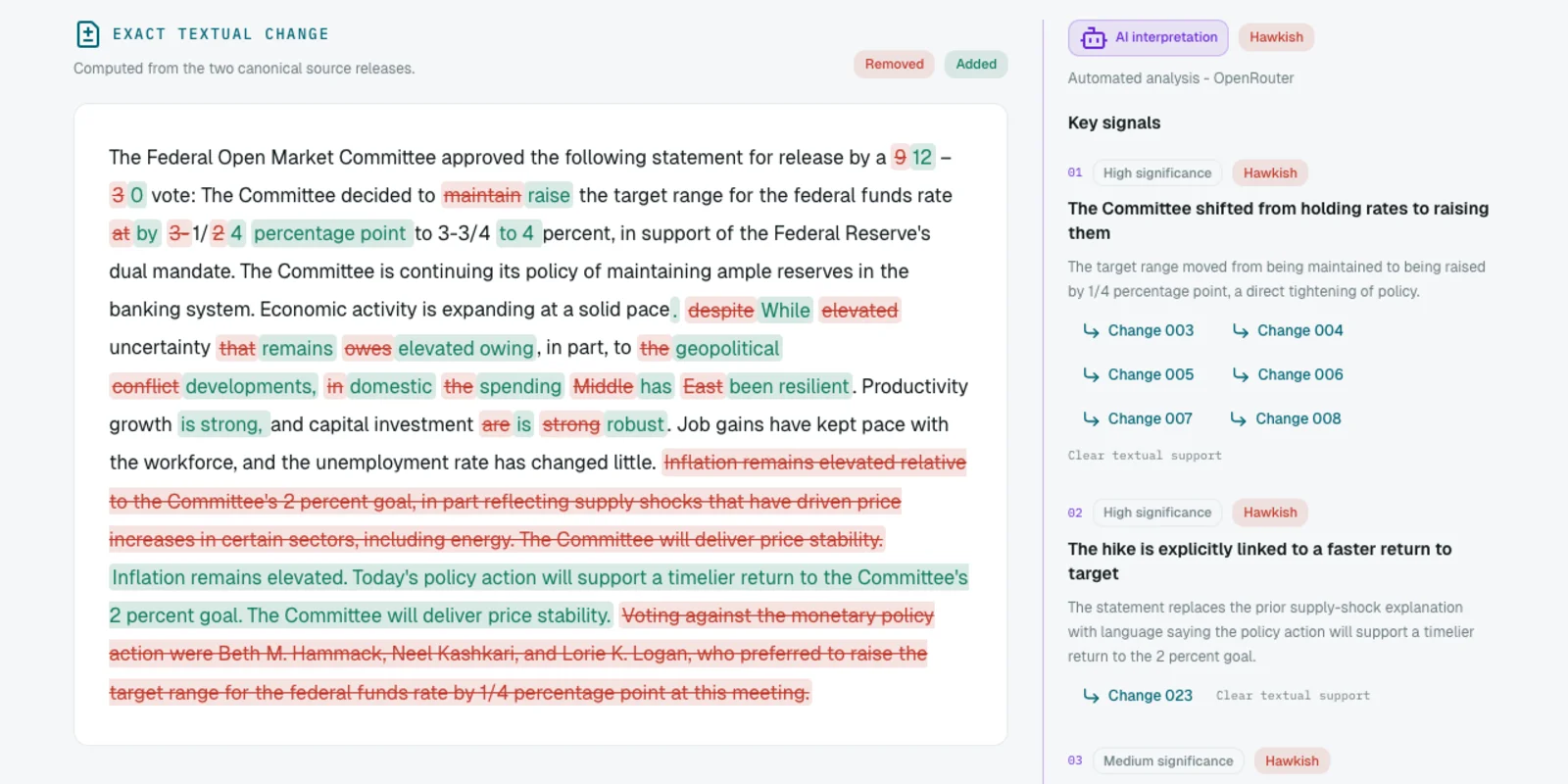
Im Statement vom 29. Juli 2026 beließ das Committee die Zielspanne bei 3-1/2 bis 3-3/4 Prozent, mit 9 zu 3 Stimmen. Alle drei Gegenstimmen „bevorzugten eine Anhebung der Zielspanne für die Federal Funds Rate um 1/4 Prozentpunkt“. Das Statement nannte die Inflation erhöht, „teilweise infolge von Angebotsschocks, die in bestimmten Sektoren, darunter Energie, zu Preisanstiegen geführt haben“.
Im Statement vom 16. September 2026 hob das Committee die Spanne mit 12 zu 0 Stimmen um 1/4 Prozentpunkt auf 3-3/4 bis 4 Prozent an. Die Erklärung mit Angebotsschocks ist verschwunden. Die Inflation „bleibt erhöht“, und ein neuer Satz lautet: „Die heutige geldpolitische Maßnahme wird eine zügigere Rückkehr zum 2-Prozent-Ziel des Committee unterstützen.“
Das FOMC-Statement vom 16. September 2026 im Vergleich zum 29. Juli auf Tradeways Macro. Rot ist entfernter Text, Grün hinzugefügter Text.
Lies jede Änderung gegen das vorherige Statement:
Signal
29. Juli 2026
16. September 2026
Richtung der Änderung
Entscheidung
Hold bei 3-1/2 bis 3-3/4 Prozent
Erhöhung um 1/4 Punkt auf 3-3/4 bis 4 Prozent
Hawkish
Abstimmung
9 zu 3, alle drei Gegenstimmen für eine Erhöhung
12 zu 0
Hawkish
Schwerpunkt
Inflation teilweise durch Angebotsschocks erklärt
Erklärung mit Angebotsschocks entfernt
Hawkish
Guidance
Kein Satz dazu, was die geldpolitische Maßnahme bewirkt
Maßnahme „wird eine zügigere Rückkehr“ zu 2 Prozent unterstützen
Hawkish
Alle entscheidenden Änderungen weisen in dieselbe Richtung, deshalb lautet die Einordnung hawkish gegenüber Juli. Das Beispiel zeigt auch, warum der Vergleichspunkt wichtig ist. Der Juli war ein Hold, der in der Schlagzeile neutral wirkt. Drei Gegenstimmen für eine Erhöhung machten ihn zu einem Hold mit hawkisher Tendenz, und die Erhöhung im September bewegte die Geldpolitik in Richtung dieser Gegenstimmen.
Die Tabelle beantwortet nicht die Frage nach dem Niveau. Ob eine Spanne von 3-3/4 bis 4 Prozent restriktiv ist, hängt von der eigenen Schätzung der Zentralbank für den neutralen Zins und von den Daten ab. Der Text des Statements klärt das nicht.
Entscheidungen enthalten oft gegenläufige Kräfte: hohe Inflation bei schwachem Wachstum, eine Zinserhöhung bei fortgesetzten Anleihekäufen, schwache Aktivität bei hartnäckigen Löhnen. Wenn bedeutende hawkishe und dovishe Änderungen gleichzeitig bestehen und keine klar überwiegt, lautet die sachliche Einordnung gemischt. Wer bei einer tatsächlich widersprüchlichen Erklärung ein eindeutiges Hawkish oder Dovish erzwingt, landet bei selbstsicher klingenden Einordnungen, die falsch sind.
Lege das neue Statement neben das vorherige derselben Zentralbank. Vergleiche denselben Dokumenttyp, etwa Statement mit Statement.
Liste die Änderungen bei Entscheidung, Abstimmung, Guidance, Projektionen oder Bilanz und Schwerpunkt auf.
Markiere jede Änderung als hawkish, dovish oder neutral. Ignoriere Änderungen, die dieselbe Bedeutung nur umformulieren.
Formuliere die Einordnung als Vergleich, etwa "hawkish gegenüber Juli", und nenne die zwei oder drei Änderungen, die den Ausschlag gegeben haben. Verwende gemischt, wenn Änderungen in beide Richtungen weisen und keine überwiegt.
Trenne die geldpolitische Einordnung von jeder Marktprognose. Ob eine Währung, eine Rendite oder ein Index sich in Richtung der Einordnung bewegt, ist eine eigene Frage mit eigener Evidenz.
Tradeways Macro übernimmt den ersten Schritt für jede abgedeckte Zentralbank. Es berechnet die genauen Wortlautänderungen zwischen einer Veröffentlichung und der vorherigen Veröffentlichung derselben Art der Zentralbank und zeigt sie als Redline. Eine KI-Interpretation schlägt dann eine Einordnung vor (hawkish, dovish, unverändert oder gemischt) und nennt die Änderungen dahinter. Die Redline wird aus dem Quelltext berechnet, die Einordnung wird von KI erzeugt. Prüfe sie deshalb anhand der geänderten Passagen, bevor du dich darauf verlässt. Der FOMC-Vergleich vom September 2026 ist das Beispiel oben.